Meet the team

Felicity James
Project lead
Felicity James is Associate Professor in English Literature at the University of Leicester. She teaches Romantic and Victorian literature, and creative writing, both within the School of Arts and for the Stoneygate Centre for Empathic Healthcare, where she’s currently seconded part-time. Her research on empathy and literature stretches back into the eighteenth and nineteenth centuries. She has published widely on Romantic topics, including Wordsworth, Coleridge, the Barbauld family and forgotten women writers. She has a particular interest in the neglected writers Charles and Mary Lamb, and the ways in which the Lambs used their creative work as a way through trauma, illness and grief. This connects with her work for the Stoneygate Centre for Empathic Healthcare, where she teaches creative writing and reading as part of the medical curriculum – including a book group for foundation year medical students, and close reading and creative writing workshops for third and fourth year medical students. You can read more about this work in articles such as Creative Approaches to Empathic Healthcare – the polyphony She is PI of the Curiosity project, and is looking forward to bringing together historic readings of empathy and feeling more broadly with the work of present-day creatives, writers, and healthcare practitioners.

Rachel Winter
Co- lead
Rachel is a Consultant Old Age Psychiatrist with Leicestershire Partnership Trust and Head of Service for the Leicester Memory Service, alongside her work as a liaison psychiatrist. She is also an honorary Associate Professor of Empathic Healthcare and Medical Education at the Stoneygate Centre for Empathic Healthcare, University of Leicester. Since graduating from Leicester Medical School in 2009, following a BSc in Psychosocial Studies at the University of East Anglia, she has combined clinical practice with a career in medical education and research. Her work sits at the intersection of healthcare, education, and the arts and humanities, with a focus on how narrative, creativity, and reflective practice can shape empathic understanding in clinical settings. She completed a PhD developing, delivering, and evaluating a novel empathy curriculum for medical students, and subsequently led the successful funding bid for the Stoneygate Centre for Empathic Healthcare. Her research includes systematic reviews examining the effectiveness and wider impacts of empathy training on wellbeing, professional development, and patient care, alongside mixed-methods studies investigating the impact of creative educational interventions to foster empathy in medical students. Rachel is particularly interested in the potential of literature and creative writing to support empathy development across healthcare communities, including their role in enhancing imagination, challenging bias, supporting wellbeing, reducing burnout, and enriching meaning in clinical practice. Through this Curiosity award, she is now extending this work to explore how creative writing and the literary arts can foster empathy across healthcare communities.
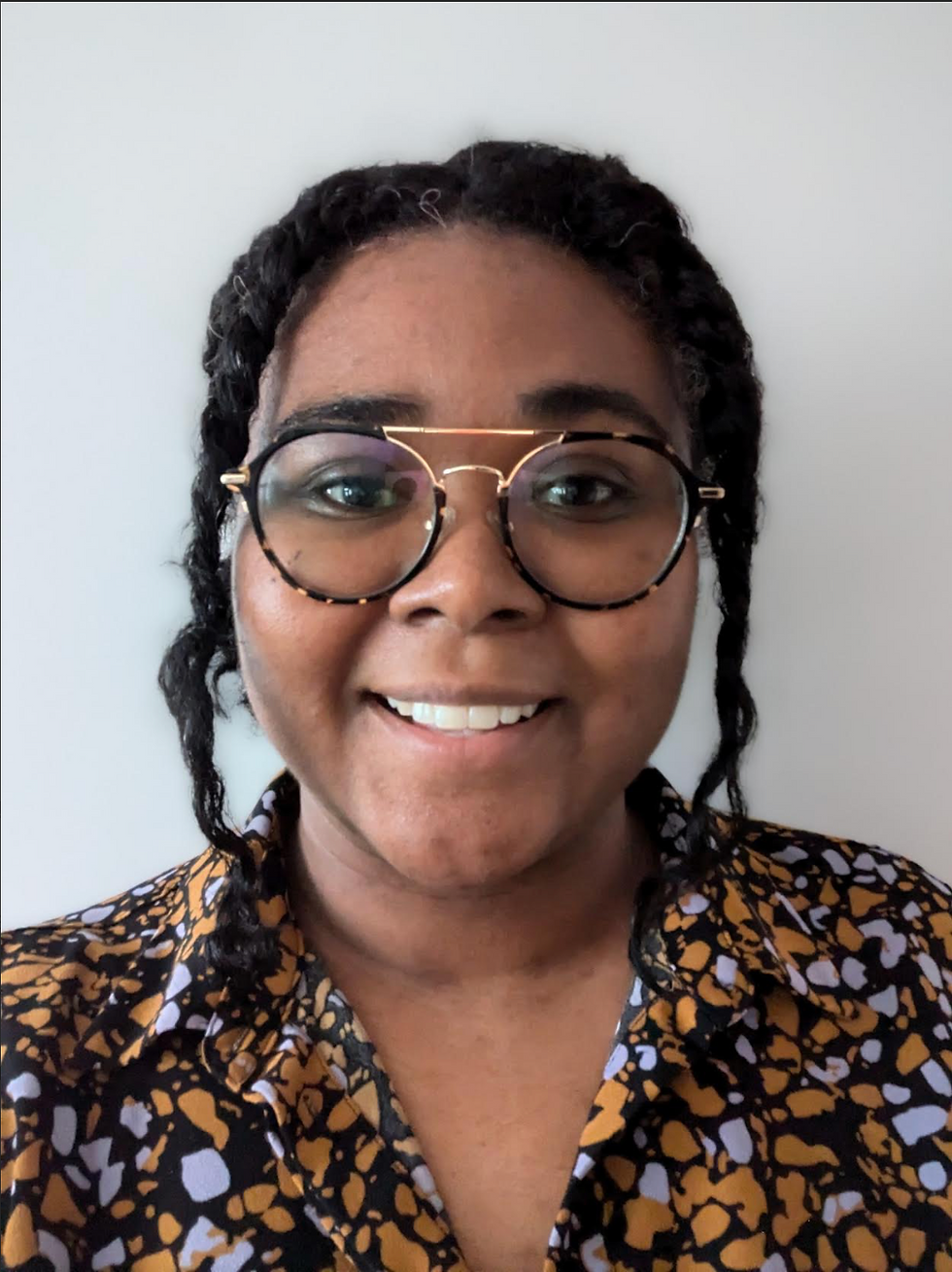
Cleo White
Cleo is a Post-Doctoral Research Associate with a passion for diversity, inclusion, and creating positive change within complex systems. She completed her PhD in Tissue Engineering at the University of Birmingham in 2019 and has since worked across a range of research, innovation, and engagement roles in both the public and private sectors. Within the Curiosity Project, Cleo supports the evaluation workstream, helping to explore how curiosity is experienced, enabled, and sustained in practice. She is involved in developing approaches that capture learning and reflect the complexity of change across the project. Her work focuses on understanding people's experiences and translating insights into meaningful change through co-creation, creative research and providing space reflection, dialogue and action. She is particularly interested in inclusive research cultures, intersectionality, belonging, and how systems and environments shape experience. Alongside this, she works on the University of Leicester’s Inclusive Research Environment Achieved through Culture Change (I-REACCH) project, where she leads the co-development of an empathic and inclusive research leadership toolkit. Cleo is motivated by ensuring that diverse and underrepresented perspectives are reflected in how evidence is gathered, interpreted, and used.

Madeleine Chalmers
Madeleine Chalmers is Lecturer in Liberal Arts at the University of Glasgow, where she directs the Liberal Arts degree programme. Her work spans intellectual history, philosophy, and literature, exploring how people in different times and places develop tools – material and conceptual – for navigating the world. Her research asks how knowledge that sits outside mainstream understanding – unconventional, embodied, or delegitimised – shapes how individuals actually live. She brings this perspective to the project through her interest in how creative and literary practice can open up new ways of thinking about healthcare, technology, and human experience. Her recent book French Technological Thought and the Nonhuman Turn (Edinburgh University Press, 2024) traced an unexpected genealogy from mysticism through surrealism to contemporary theories of technology, placing literary explorations at the heart of philosophical enquiry. With Benjamin Dalton and Naomi Jacobs, she has also published an article on creative methodologies for hospital and healthcare design futures (Esprit Créateur, 65.4, doi: 10.1353/esp.2025.a985868). On the Curiosity project, Madeleine leads the Medical Humanities strand of the online research symposia, beginning with ‘The Difficulty of Empathy: Rethinking the Literary Arts and Healthcare’, 23 September 2026.

Helen Foster
Helen Foster is a writer, researcher, writing for wellbeing facilitator and oral historian. She is Research & Innovation Associate on the Curiosity Project, exploring the power of the creative writing process as a tool for healing and empathy. She delivers the Curiosity Shop creative practice workshops, drawing on both her academic research, and her work as a creative writing for wellbeing practitioner. She publishes on compassionate writing practice and arts for health, including her book with Mark Pearson, Creative Writing - Mark Pearson|Helen Foster Arts for Health exploring how the written word can be used as a therapeutic tool in pursuit of improved mental health and wellbeing. She has worked with a range of creative organisations and community agencies, including Writing East Midlands, Shine Lincolnshire and Old Bird Theatre Company, designing and delivering programmes for diverse audiences, including carers, people living with mental health challenges, people experiencing isolation during the COVID-19 pandemic and women living without children. She has been an Artist in Residence for the British Library’s Sharing Our Sounds initiative, taking oral history archives back to the places that inspired them as a springboard for found poetry, and is currently writer in residence for CILIP, the Chartered Institute for Librarians and Information Professionals. She first came to Leicester as Acting Manager of the East Midlands Oral History Archive, currently part of the university’s archives and special collections. She designed and led the Silent Archive, a National Lottery Heritage Fund project exploring contemporary and historical narratives around menopause. Publications on menopause include A Bloody History of Menopause, a series of six articles for the Wellcome Collection website themed around menopause, 2023. She has received Wellcome Trust ISSF funding for Sharing Stories: developing a wellbeing approach to gathering midlife narratives, a review of ways in which women at midlife share their stories, contributing an interdisciplinary perspective to academic discussions around narrative practices and the wellbeing agenda, and ESRC IAA funding for Menopaurus: the words women use to talk about menopause.